House-price growth hits the brakes: what the Bank of Albania's H1 2026 data says
Annual price growth fell to 10% and homes take longer to sell. What the new central-bank data means for buyers, sellers and investors.
By Galip Sulaj5 min read
After two years of rapid gains, Albania's housing market is slowing down. That is the main message of the Bank of Albania's Financial Stability Report for the first half of 2026, published on 23 September 2026. Whether you are buying, selling or investing, the new figures change how you should think about price, negotiation and expected returns.
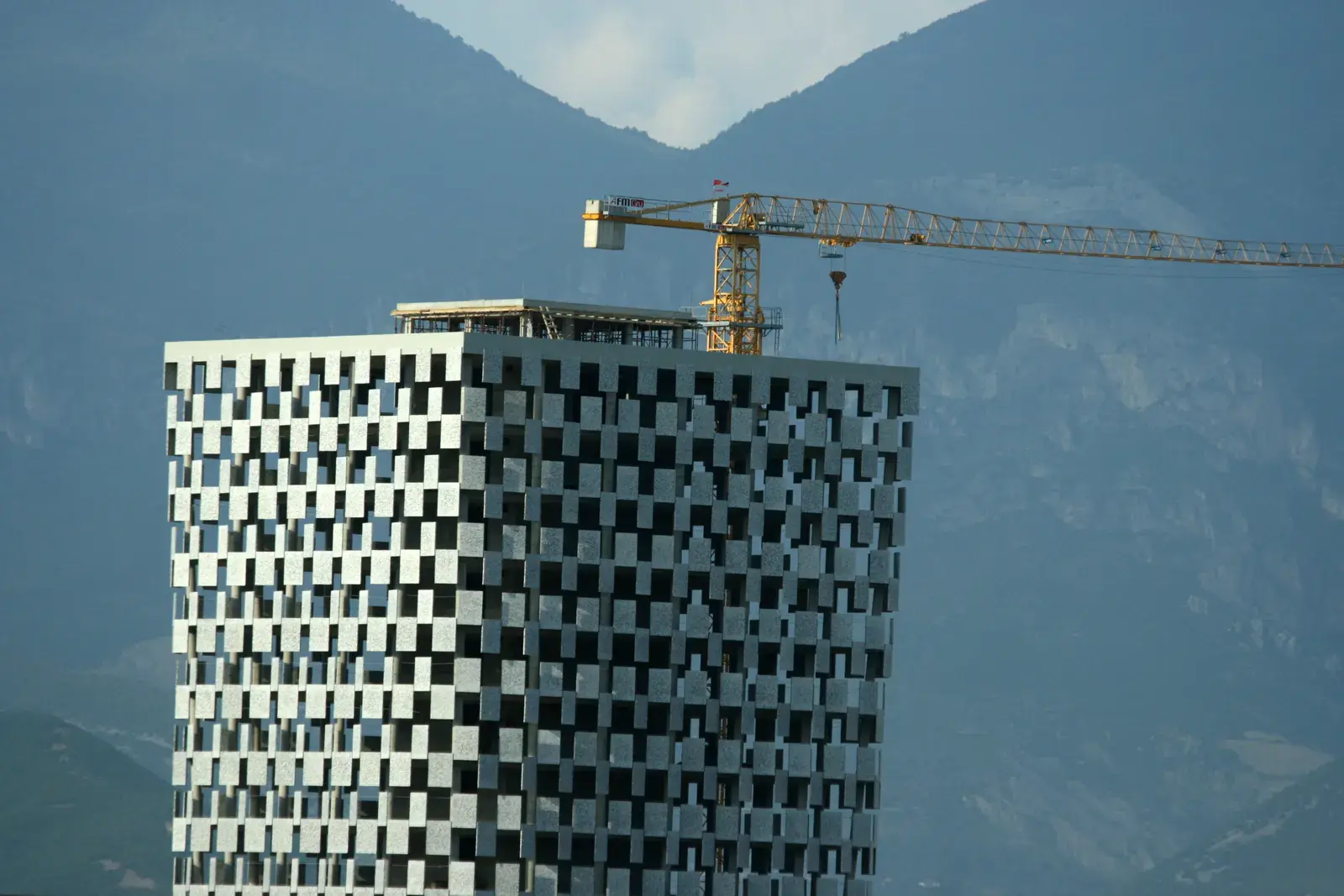
Cover photo: Sani Dobroshi / Wikimedia Commons, CC BY-SA 4.0
- Change in the national house-price index, H1 2026 vs H2 2025
- 0%
- National year-on-year growth, H1 2026
- +10%
- Average time to sell nationally, H1 2026
- 9.9 months
- Share of purchases financed by bank credit
- 58%
From +41.7% to +10%: the slowdown in numbers
According to the report's figures, as summarised by Monitor on 23 September 2026, the national house-price index (a Fisher index) was unchanged in the first half of 2026 compared with the second half of 2025. Year on year, growth was 10%. For comparison, annual growth had been 28% in the second half of 2025 and 41.7% in the first half of 2025.
| Category | Annual growth |
|---|---|
| H1 2025 | 41.7% |
| H2 2025 | 28% |
| H1 2026 | 10% |
Put simply, prices are not falling, but they are no longer climbing at the pace of recent years. Ten per cent a year is still strong growth. Yet the drop from over 40% to 10% within a single year is a clear sign that the market is entering a calmer phase.
Tirana behaves a little differently. In the first half of 2026, prices in the capital rose 10% compared with the second half of 2025 and 9% year on year. So while the national average stood still, Tirana picked up again over those six months.
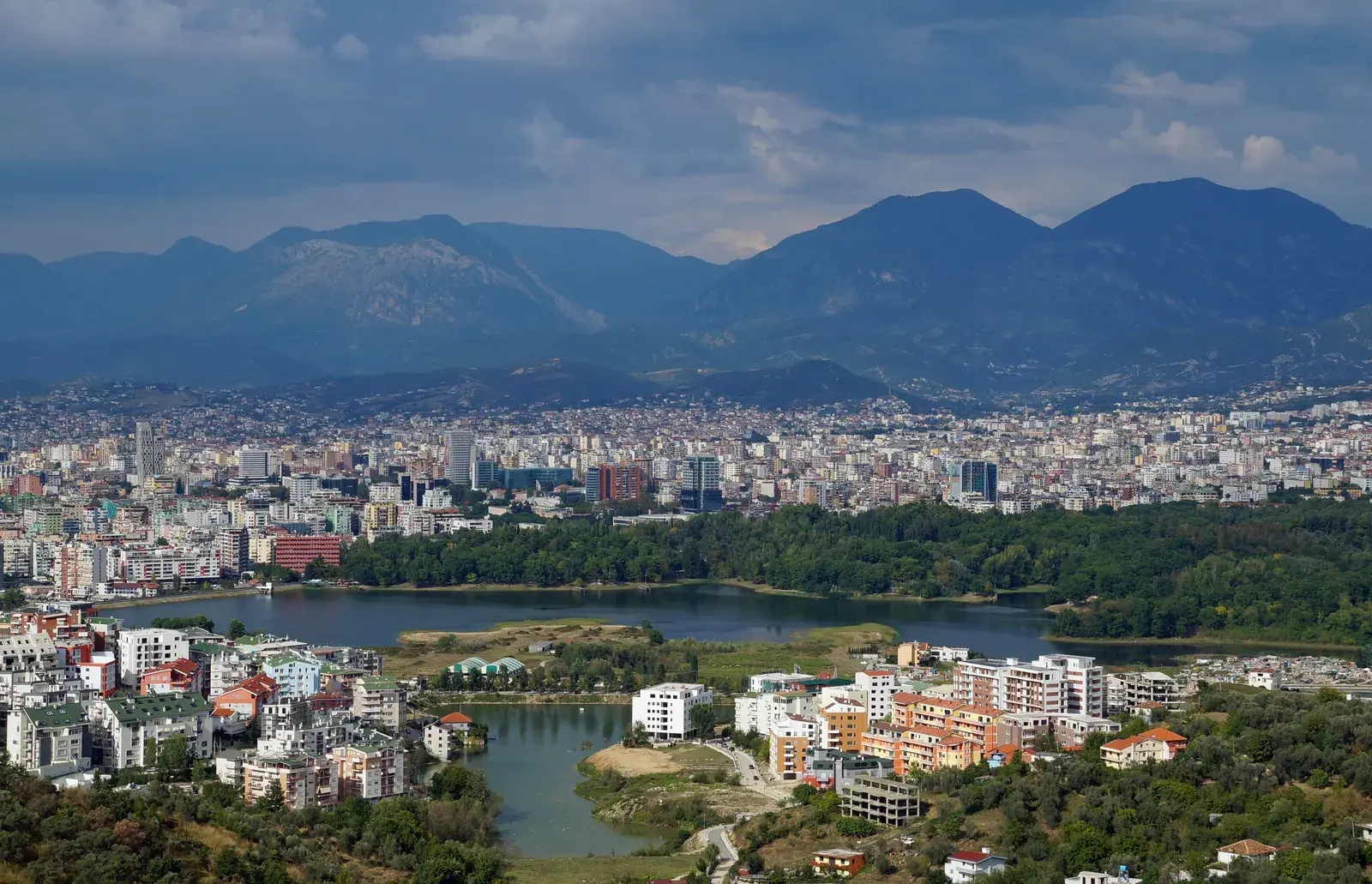
Photo: Albnext / Wikimedia Commons, CC BY-SA 4.0
Homes take longer to sell, except on the coast
Time on the market matters as much as price. Nationally, the average time to sell a home rose to 9.9 months, from 9.1 months in the survey's previous reading. In Tirana it lengthened more sharply, from 8.1 to 9.7 months. The coast is the exception: there, time to sell fell from 9.9 to 8.2 months.
| Category | Previous reading | H1 2026 |
|---|---|---|
| National | 9.1 months | 9.9 months |
| Tirana | 8.1 months | 9.7 months |
| Coast | 9.9 months | 8.2 months |
| Other areas | 10.1 months | 10.6 months |
According to Bold News, citing the central bank's report, most sales closed at the asking price or up to 5% below it. Large discounts were rare. In other words, there is room to negotiate, but it is limited.
Who is buying, and how
The report also shows that bank credit financed about 58% of residential and commercial purchases. About 20% of residential sales went to non-resident buyers, mostly from EU countries. That helps explain why the coast, where foreign demand is strongest, is selling faster.
The survey covers about 230 real-estate agents and construction companies, representing roughly 75–80% of market turnover. The data was collected by INSTAT, Albania's statistics institute.
Supply and costs
As reported by Ekofin, the Bank of Albania notes that building permits were above the 2025 quarterly average, rents kept rising, unsold stock fell, and construction costs rose year on year because of wages and materials. Lower stock and higher costs are part of the reason prices are not falling even though demand has cooled.
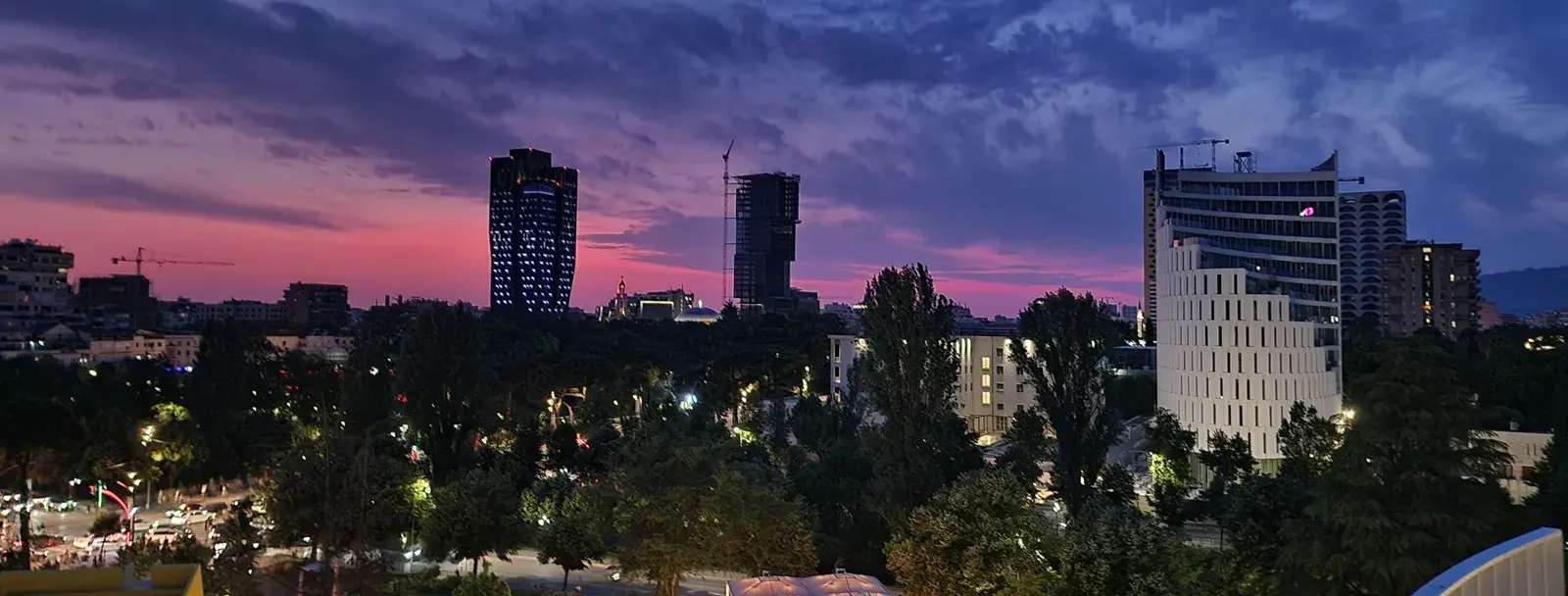
Photo: Tim Tregenza / Wikimedia Commons, CC BY-SA 3.0
What this means for you
If you are buying a home to live in, you have a little more time to choose. With homes staying on the market for close to ten months, there is no reason to decide under pressure. Still, do not expect big discounts: the data shows most deals close within 5% of the asking price. Before making an offer, you can check the price against our property valuation tool.
If you are selling, realistic pricing matters more now than a year ago. Buyers have more choice and more time, so an asking price well above the market is likely to keep your home listed for longer.
If you are investing, the assumption of 20–40% annual gains is no longer supported by the latest data. Model your returns on more cautious scenarios, and include the full costs of buying.
- In H1 2026, national prices were unchanged from the previous half-year; annual growth fell to 10%.
- Tirana rose 10% over the six months, while the national average stood still.
- Homes are selling more slowly (9.9 months nationally), except on the coast (8.2 months).
- Most sales close at the asking price or up to 5% below.
- Credit finances about 58% of purchases; about 20% of residential sales go to non-residents.
The Bank of Albania's data does not point to falling prices. It points to a market that is finding its balance. For most buyers that is good news: more time, more information and more reasonable negotiations.
Sources
- Bank of Albania, press release: Financial Stability Report for H1 2026, 23 Sep 2026
- Monitor: House-price growth slowed in the first half of 2026 (in Albanian), 23 Sep 2026
- Bold News: House-price growth slows in 2026, 23 Sep 2026
- Ekofin: House prices up 10%, Tirana accelerates again (in Albanian), 23 Sep 2026
Share the article
New articles by email
Guides on buying, renting and the property market in Albania, straight to your inbox.
One email when we publish a new article. You can unsubscribe at any time. Privacy
Comments
Log in to join the conversation.
No comments yet. Be the first to share your view.