Legalisation is changing: a 30-day fast track and new rules for homes on someone else's land
A draft law amending Law 20/2020 brings fast-track legalisation for an extra fee, new deadlines and notarised agreements for homes built on third-party private land.
By Galip Sulaj8 min read
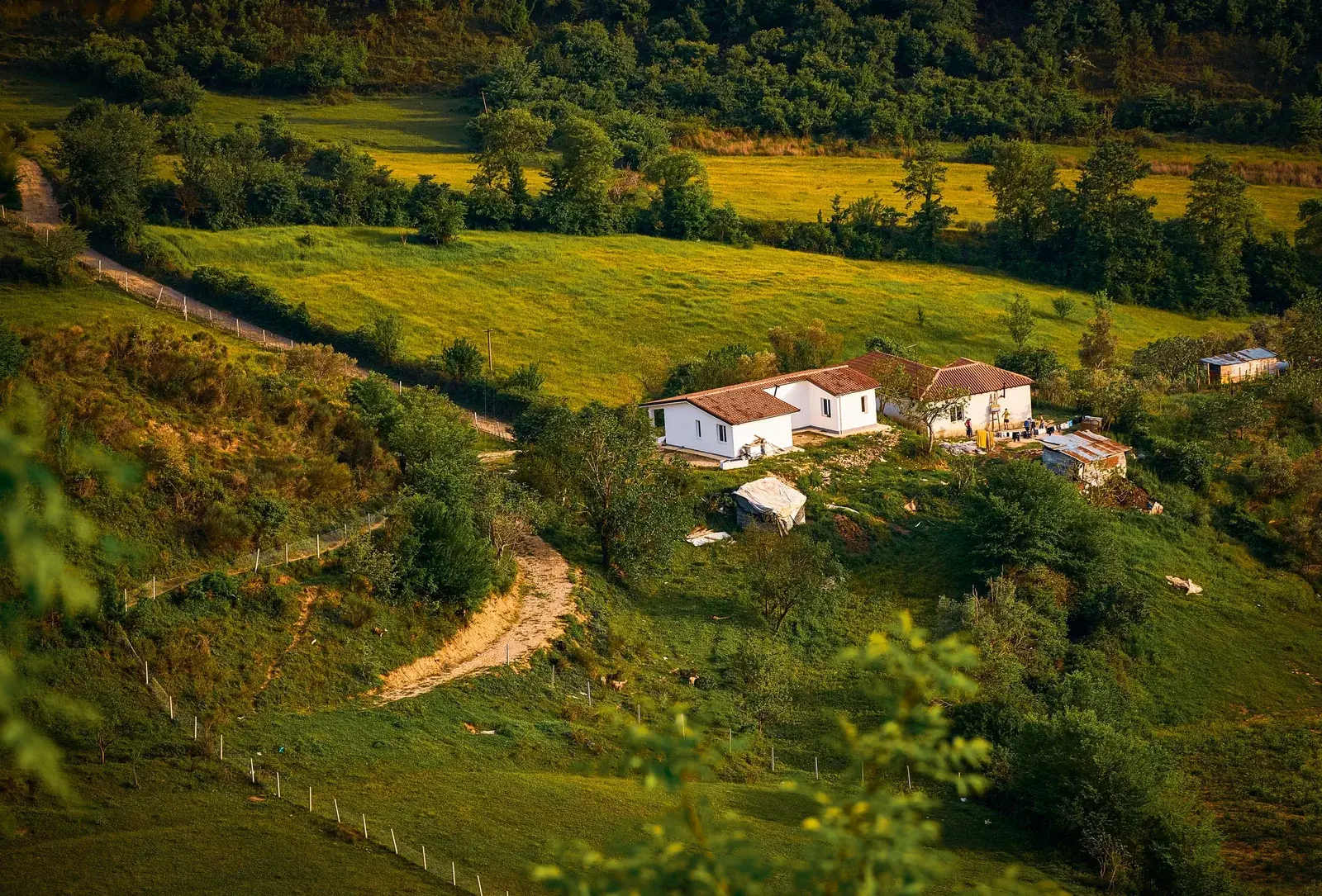
Many families in Albania still live in homes that are waiting to be legalised. In September 2026, the government put out for public consultation a draft law amending Law no. 20/2020 "On the completion of transitional property processes in the Republic of Albania". The draft goes to the heart of legalisation: it introduces a fast-track 30-day procedure for an extra fee, new rules for homes built on someone else's private land, and consequences for anyone who obstructs on-site checks. A week later, the Council of Ministers also approved two decisions affecting the paperwork and fees for these processes.
Cover photo: Mick Haupt / Pexels
- Maximum time for fast-track legalisation, for an extra fee (draft law)
- 30 days
- Zones where a home on third-party private land could be legalised
- 7+ floors
- Time to come forward after a public notice when the occupant cannot be found
- 90 days
- Legalisation applications still pending in Shkodër county
- 27,000
What it is and where it stands
The draft law was reported by Ekofin on 9 September 2026 and by Telegraf on 10 September as a document released for public consultation. It amends several articles of Law 20/2020, including Article 29, which is rewritten entirely. It is still a draft: its content may change during consultation and in Parliament, and it takes effect only once adopted and published in the Official Gazette.
On 16 September 2026, the Council of Ministers approved three property decisions, which the State Cadastre Agency (ASHK) published on 18 September:
- Decision (VKM) no. 698, on issuing ownership documents for buildings without title, functional land and yards. We explained it in detail in our article on VKM 698/2026.
- VKM no. 699, an addition to VKM no. 1178/2020 on the documentation and detailed rules for recording buildings without permits.
- VKM no. 700, additions to VKM no. 5/2023 on the fees, payments and penalties of transitional property processes.
ASHK's website carried the titles of decisions 699 and 700 but not their full text, so this article does not go into their content.
- Law no. 20/2020The core law on legalisation and transitional property processes.
- VKM no. 1178Documentation and rules for recording buildings without permits.
- VKM no. 5Fees, payments and penalties for transitional processes.
- Draft law in public consultationAmendments to Law 20/2020, according to Ekofin.
- VKM no. 698, 699 and 700The Council of Ministers approves changes on untitled property, recording and fees.
- ASHK publishes the decisionsNotices on ASHK's official website.
Fast-track legalisation: 30 days, for an extra fee
The most visible change is a fast procedure. According to Ekofin, the authority responsible for territorial development can ask ASHK to complete a legalisation within 30 days, in return for an additional fee, whether or not the occupant has applied. Bulevard adds that the procedure also applies when the request comes from institutions. Media reports did not give the amount of the extra fee.
For families who have been waiting for years, this could be a way out, but only if the fee is affordable and the file is complete. For buyers, a faster procedure means a property can be registered in the cadastre sooner, which makes it easier to sell or to use as collateral for a mortgage.
Homes on someone else's land
The most sensitive change concerns unpermitted homes built entirely on private land belonging to someone else. According to Ekofin and Bulevard, the draft allows them to be legalised in zones where territorial plans foresee buildings of more than six floors, under these conditions:
- Only the building is legalised. The land does not pass to the occupant.
- Before legalisation, the occupant files a notarised declaration with ASHK accepting that, if the plot is developed, their space in the new building will be set by a notarised agreement with the landowner or investor.
- If no agreement is reached, the occupant receives housing space under the standards for families in need, as set by housing legislation.
- Anyone who refuses to file the declaration is excluded from legalisation.
- The property is registered with an annotation that stays until the relationship with the land is finally settled.
- If the building has no access to a public road, the occupant gains a right of way over third-party land under the Civil Code.
According to Ekofin, this solution does not apply to unpermitted additions to registered buildings, to buildings that breached their construction permit, or to buildings with a socio-economic function.
Photo: Jan Pešula / Wikimedia Commons, CC0
Obstructing checks risks exclusion
The draft tightens the process on the ground. According to Ekofin and Telegraf, an occupant who obstructs ASHK staff during a site check may be excluded from legalisation. When the occupant cannot be identified, ASHK issues a public notice within 10 days. If nobody comes forward within 90 days, ASHK decides not to legalise.
The draft also sets deadlines for agricultural land of former cooperatives and state farms: ASHK draws up lists of actual users, which are approved by the municipal council. Those who do not respond have 30 days to complete their file; the procedure is then suspended for 60 days and, without a response, the request is rejected.
Unlawful acts and developers
ASHK gains the power to annul ownership documents issued unlawfully, within the legal deadlines. An appeal suspends enforcement, and a restriction is registered on the property. Cases discovered after the deadline, or where the property has passed to third parties, go to the State Advocate for court action. According to Telegraf, developers who breach their construction permit will be classified as "risk subjects" in the records of territorial mismanagement.
The draft also adds a chapter on religious communities: buildings erected before 10 August 1991 without title can receive an ownership document, and state-owned functional land passes to them free of charge.
Photo: Albinfo / Wikimedia Commons, CC BY 4.0
How big the backlog is
There is no recently published national figure, but regional data gives an idea. According to public broadcaster RTSH, more than 2,000 legalisation decisions have been issued in Shkodër in 2026, while about 27,000 applications remain to be reviewed at county level.
This is a draft law under consultation. Do not sign agreements with a landowner or an investor on the strength of its provisions until the law is adopted and published. For any specific case, ask ASHK or a lawyer.
What to do now
If you are buying a property that is going through legalisation, ask to see the legalisation permit and the ownership certificate. Do not pay the full amount for a building that is not yet registered, and work out the full costs of buying from the start.
Frequently asked questions
How long does fast-track legalisation take under the draft?
Sources
- Ekofin: Legalisation and ownership rules change, with new deadlines and fast-track procedures (in Albanian), 9 September 2026
- Telegraf: Legalisation and ownership rules change (in Albanian), 10 September 2026
- Ekofin: Legalisation procedures change for unpermitted homes on third-party land (in Albanian), 13 September 2026
- Bulevard: The legalisation law changes, with conditions for zones where tower blocks are planned (in Albanian), 13 September 2026
- ASHK: VKM no. 699 of 16.09.2026 (in Albanian), 18 September 2026
- ASHK: VKM no. 700 of 16.09.2026 (in Albanian), 18 September 2026
- ASHK: VKM no. 698 of 16.09.2026 (in Albanian), 18 September 2026
- Official Gazette (QBZ): Law no. 20/2020 (in Albanian)
- RTSH: Over 2,000 legalisation decisions in Shkodër in 2026, 27,000 applications still pending (in Albanian), September 2026
Read more
- What is a home worth?A free estimate from similar listings and the official reference prices.
- Buying costs, with a calculatorThe notary tariff, the ASHK fees and who pays which tax, with official sources.
- Buying from abroad, step by stepPower of attorney and apostille, ASHK checks, the notary and paying by bank for those who live outside Albania.
Share the article
New articles by email
Guides on buying, renting and the property market in Albania, straight to your inbox.
One email when we publish a new article. You can unsubscribe at any time. Privacy
Comments
Log in to join the conversation.
No comments yet. Be the first to share your view.