Is there a property bubble in Albania? What the 2026 data show
Home prices have risen 3.6 times since 2015 and wages only 1.6 times, and a third of homes stand empty. But lending is moderate and the market is cooling. The signals for and against a bubble.
By Galip Sulaj8 min read

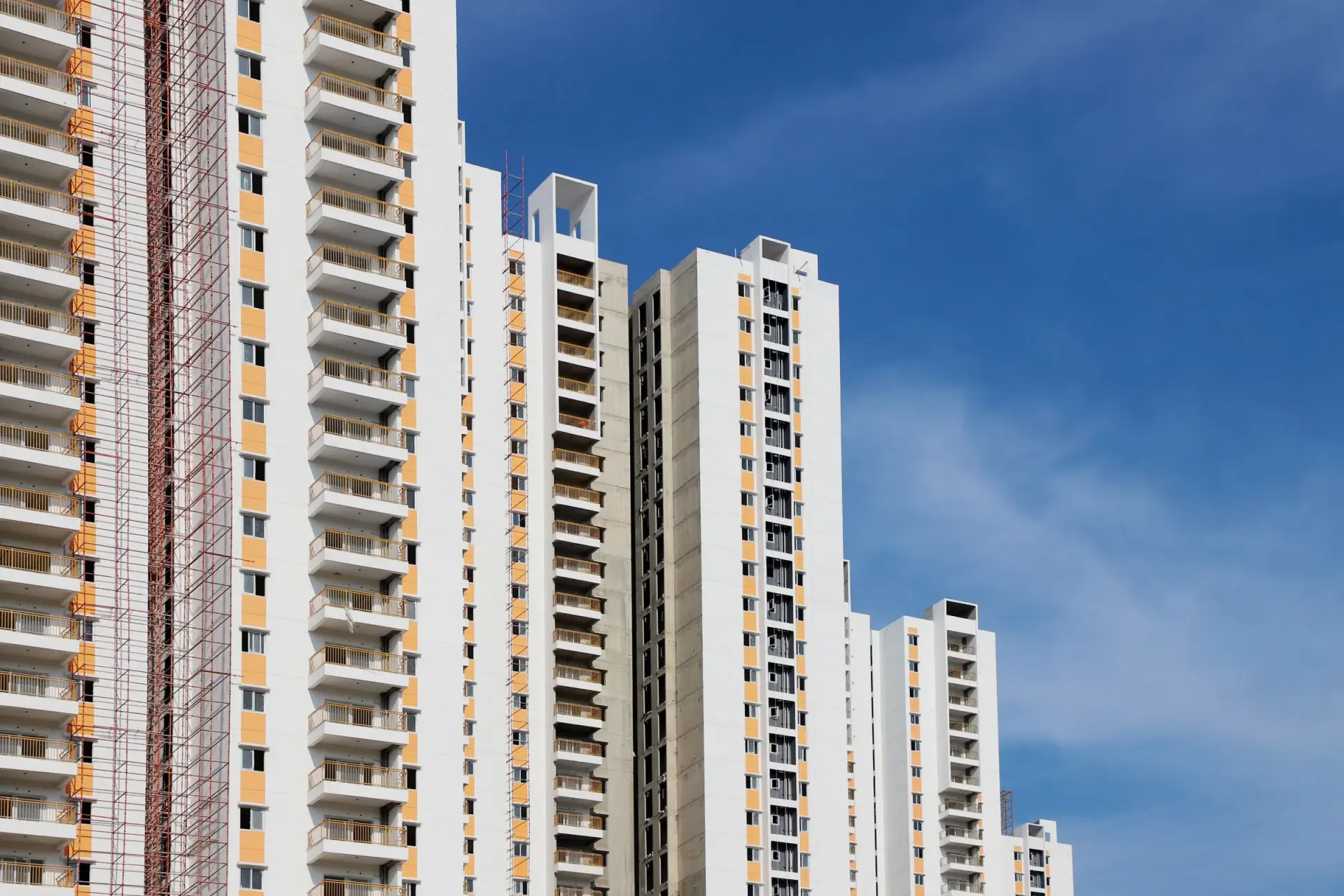
Cover photo: Anya Juárez Tenorio / Pexels
Is there a property bubble in Albania? Data from summer 2026 give a careful answer: there are clear signs of overvaluation, especially in Tirana and on the coast, but not the features of a classic credit-fuelled bubble. That is also the conclusion of an analysis by Monitor (31 July 2026), which speaks of a "medium to high risk of overvaluation" but a "relatively low" probability of a classic bubble. Meanwhile, the Bank of Albania reported on 23 September that price growth slowed to 10% a year and that the national index did not move in the first half of 2026. Below we separate the worrying signals from the reassuring ones, and explain what it means for you.
- There are signs of overvaluation, but not a classic bubble: national home prices rose 3.6 times between 2015 and 2025, while wages rose only 1.6 times.
- The market is cooling: according to the Bank of Albania, annual price growth fell to 10% in the first half of 2026 and the national index did not move compared with the end of 2025.
- Credit is not driving the market as in a classic bubble: in 2025, 38% of loans covered only 60% or less of the property's value.
- The main risks are affordability (about 18 years of income for an apartment in Tirana) and empty homes: 32.9% nationally, about 52% in Vlorë.
- For people buying a home to live in, a calmer market leaves time to negotiate; investors should plan for lower returns than in 2024–2025.
- Home prices in 2025 vs 2015 (Fisher index = 1 in 2015)
- 3.6×
- Wages over the same period
- 1.6×
- Of income needed to buy a flat in Tirana
- 18 years
- Annual price growth, H1 2026 (down from 41.7% a year earlier)
- +10%
What a bubble is, and why people are asking
A bubble is a rise in prices far above what wages, rents and the economy justify, usually pushed by easy credit and the belief that "prices only go up". When that belief breaks, prices fall hard and banks take losses. Overvaluation is milder: prices are higher than wages and rents justify, but they can stall or rise more slowly without collapsing. In Albania the question has become unavoidable: according to the Bank of Albania's Fisher index, national prices rose from 1.0 in 2015 to 3.6 in 2025, and the Tirana index reached about 3.1, while wages rose only to 1.6 (Monitor, 31 July 2026). In other words, prices rose more than twice as fast as wages.
| Category | Index in 2025 |
|---|---|
| Home prices (national) | 3.6 |
| Home prices (Tirana) | 3.1 |
| Wages | 1.6 |
The worrying signals
Affordability. In Tirana it takes about 18 years of income to buy a flat, and Tirana ranks 37th in the world on this measure according to Numbeo data for the first half of 2025 (Monitor, 31 July 2026). Rent has become a burden too: in Ish-Blloku, renting a one-bedroom flat takes about 95% of one person's average net wage (Monitor, 8 August 2026).
Many empty homes. According to the 2023 census, 356,204 of 1,082,529 conventional dwellings, or 32.9%, were unoccupied. The rate was about 52% in Vlorë, about 44% in Durrës and about 22% in Tirana (Monitor, 31 July 2026). Many flats are bought as investments or holiday homes rather than to live in.
| Category | Value |
|---|---|
| Vlorë | 52% |
| Durrës | 44% |
| National average | 32.9% |
| Tirana | 22% |
A shrinking population. The resident population fell from almost 2.9 million in 2015 to about 2.33 million in 2026, while the diaspora is estimated at about 2.26 million people (Monitor, 31 July 2026). Local housing demand does not grow on its own; it depends more and more on the diaspora, foreigners and tourism.
Banks are exposed. Loans for real estate reached about €4.7 billion: household mortgages make up 26.8% of the loan book and business real-estate loans 24.3%, together around half of all bank credit (Monitor, based on the Bank of Albania's 2025 annual supervision report; Hashtag.al, 10 July 2026).
Photo: Engin Akyurt / Pexels
The reassuring signals
More credit, but with large deposits. The share of purchases financed by bank loans rose from about 33% in 2021 to 61% in 2025, but 38% of loans covered 60% or less of the property's value (Monitor, 31 July 2026). This ratio is called LTV (loan-to-value): the share of the property's value financed by the loan. Buyers bring a lot of their own money, which protects banks if prices correct.
The market is cooling by itself. According to the Bank of Albania's Financial Stability Report, the national price index was unchanged in the first half of 2026 compared with the second half of 2025, and annual growth fell to 10%, from 28% and 41.7% in the two previous readings. Time to sell lengthened to 9.9 months nationally but fell to 8.2 months on the coast (Monitor, 23 September 2026). We analysed this in our article on the price slowdown.
Demand has real sources. About 20% of home sales went to non-residents, mostly from the EU (Monitor, 23 September 2026). Remittances rose from about €1.29 billion to €2.27 billion between 2015 and 2024, and around 20–25% of annual foreign direct investment goes into real estate (Monitor, 31 July 2026).
Costs rule out a quick fall. Unsold stock has declined and construction costs have risen, according to the Bank of Albania (Ekofin, 23 September 2026). With more expensive construction, developers have little room to cut prices.
| Prices vs wages (2015–2025) | 3.6× vs 1.6× | Worrying |
|---|---|---|
| Years of income for a flat in Tirana | about 18 | Worrying |
| Unoccupied dwellings (2023) | 32.9%; Vlorë 52% | Worrying |
| Real estate's weight in bank lending | about half the loan book | Worrying |
| Loans with LTV up to 60% | 38% of loans | Reassuring |
| Annual price growth, H1 2026 | 10%, down from 41.7% | Reassuring (cooling) |
| Non-resident buyers | about 20% of sales | Reassuring (real demand) |
What it means for you
If you are buying a home to live in, a sharp correction is not the scenario the sources point to, but the gains of 2024–2025 are not continuing either. You have time to negotiate and compare apartments for sale; check the price with our free property valuation and test your monthly payment with the calculator below, at a rate you could still afford if it went up.
- Monthly payment
- €389
- Loan amount
- €70,000
- Total interest
- €46,725
- Total paid (with down payment)
- €146,725
If you are investing, the biggest risk is not a sudden crash but a lower return than expected: high purchase prices, short-term letting with growing competition and possible tax changes (see the market-value property tax and where short-term rentals earn most). Areas with many empty homes, such as parts of the coast, are more exposed if foreign demand weakens.
If you are selling, the market is becoming "more selective", as Monitor puts it. A realistic price, based on prices per m² by area in Tirana, sells faster than one built on the rises of the last two years. A good agent can help you set it right. Buying from abroad? Start with our guide for buyers abroad.
By how much did national home prices rise from 2015 to 2025, according to the Fisher index?
Sources
- Monitor: Is the Albanian property market at risk of a bubble? (in Albanian), 31 July 2026
- Monitor: Home-price growth slowed in the first half of 2026 (in Albanian), 23 September 2026
- Bank of Albania: Financial Stability Report for the first half of 2026 (in Albanian), 23 September 2026
- Ekofin: Home prices up 10%, Tirana accelerates again (in Albanian), 23 September 2026
- Hashtag.al: Almost €4.7 billion lent for real estate (in Albanian), 10 July 2026
- Monitor: Affordability index, rising rents weigh on families (in Albanian), 8 August 2026
Read more
- What is a home worth?A free estimate from similar listings and the official reference prices.
- Buying costs, with a calculatorThe notary tariff, the ASHK fees and who pays which tax, with official sources.
- Buying from abroad, step by stepPower of attorney and apostille, ASHK checks, the notary and paying by bank for those who live outside Albania.
Share the article
New articles by email
Guides on buying, renting and the property market in Albania, straight to your inbox.
One email when we publish a new article. You can unsubscribe at any time. Privacy
Comments
Log in to join the conversation.
No comments yet. Be the first to share your view.