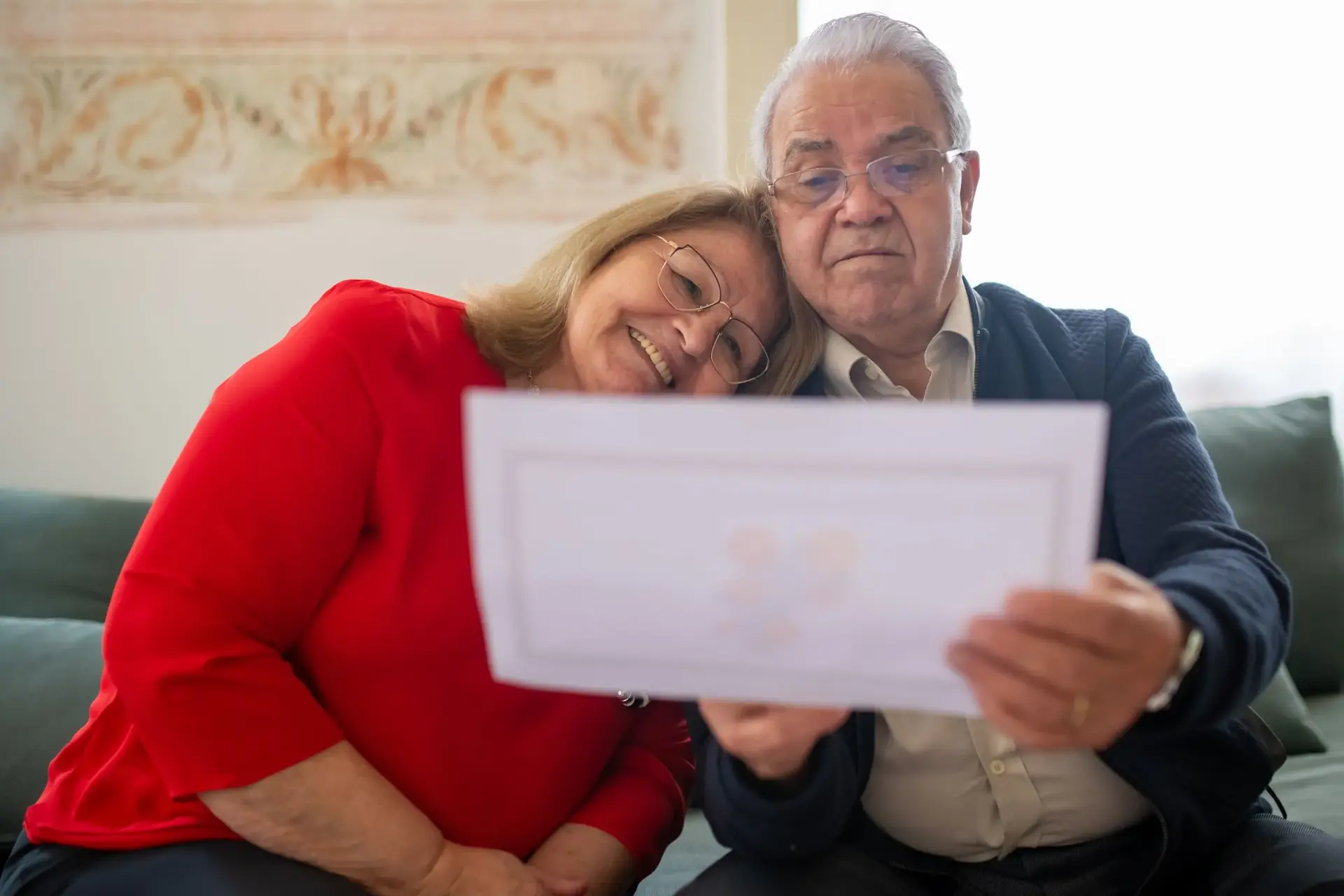
Earthquakes and your building in Albania: how to check its safety before you buy
You cannot see a building's earthquake safety in Albania: the permit, structural design, final inspection report and occupancy certificate show it. For older or doubtful buildings, ask a licensed engineer for a stability assessment.
By The hyrja.al teamEditorial policy14 min read
Reviewed by Galip Sulaj on
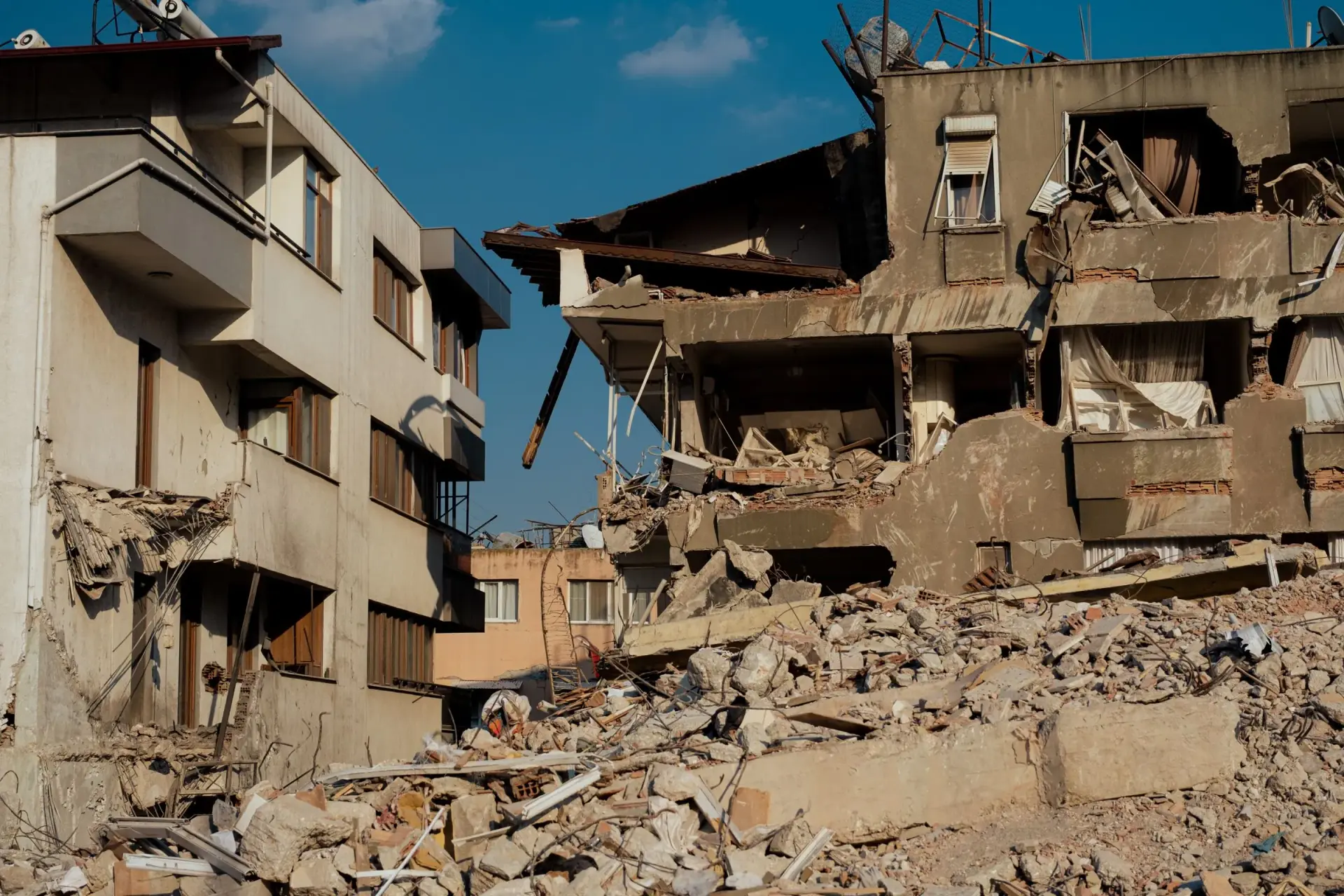
Cover photo: Doruk Aksel Anıl / Pexels
Before you buy an apartment in Albania in an earthquake-prone area, such as Tirana and Durrës, ask for four documents: the building permit, the structural design, the final inspection report (kolaudim) and the occupancy certificate. Together they show that the building was designed and built to the anti-seismic technical rules and checked by licensed engineers. When the building is old, legalised, has added floors or has cracks in its structure, also order a structural stability assessment (aktekspertizë) from a licensed structural engineer before you pay the deposit.
- Before the deposit, ask for four documents: the building permit, the structural design, the final inspection report (kolaudim) and the occupancy certificate.
- For an old or legalised building, one with added floors or with cracks in its structure, order a structural stability assessment from a licensed structural engineer.
- When you buy from the developer, they must hand you a ten-year insurance policy covering collapse or serious construction defects (Law no. 107/2014, Article 42, point 9).
- Albania's anti-seismic rules are KTP-N.2-89 from 1989, while Eurocode 8 has been adopted as an Albanian standard: ask which rules the structure was calculated to.
- Earthquake insurance is not compulsory, because the 2025 draft law had not been published as law by 26 October 2026; check that the policy names earthquake as an insured risk.
- Magnitude of the earthquake of 26 November 2019 (USGS)
- 6.4
- Deaths, according to the post-disaster needs assessment
- 51
- Damage and losses in 11 municipalities (PDNA, February 2020)
- 985 million €
- Year of the anti-seismic technical rules KTP-N.2-89
- 1989
What did the earthquake of 26 November 2019 teach us?
The earthquake of 26 November 2019 showed that the risk is not theoretical and that most of the damage falls on homes. According to USGS, the shaking struck at 03:54 Albanian time, with a magnitude of 6.4 at a depth of about 22 km, some 15 km west-southwest of Mamurras. The EU Delegation, which published the post-disaster needs assessment (PDNA) on 5 February 2020, reported 51 deaths, 17,000 people displaced and more than 200,000 affected in 11 municipalities.
Photo: Nemika F / Pexels
According to the same assessment, the total effect of the disaster exceeded 980 million €, while recovery needs reached almost 1.08 billion €, of which housing made up nearly 76%. Two months earlier, on 21 September 2019, an earthquake of magnitude 5.6 had been recorded in the same area, with its epicentre near Shijak (USGS).
Choose a place to see its details on the map.
Why this matters for a buyer: the same building can come through an earthquake without structural damage or end up unusable, depending on its design, its materials and how it was built. The documents show that difference, not the facade.
Which rules are buildings in Albania designed to?
Albania's anti-seismic technical rules are KTP-N.2-89, from 1989. The Supreme State Audit (KLSH), in a report on construction quality described by the newspaper Shqiptarja in December 2019, noted that these rules are still in force and were written for buildings that rarely exceeded 5 to 6 floors, while many new buildings have more than 10 floors.
In parallel, the General Directorate of Standardisation (DPS) has adopted Eurocode 8 as an Albanian standard: SSH EN 1998-1 for buildings, revised with SSH EN 1998-1-1:2024. After the earthquake, the government decision on assessments of damaged buildings (Council of Ministers Decision, VKM, no. 26/2020) also refers to the standard SSH EN 1998-3:2005 for assessing structures. In July 2024, the Institute of Geosciences and the Polytechnic University of Tirana held a symposium on the National Seismic Hazard Model 2024.
For the buyer, the practical message is simple: the age of the building is not proof enough. Ask which rules the structural calculation followed and ask to see it in writing in the report of the structural design.
- M 6.9 earthquake near the coast of MontenegroEpicentre at sea, near Stari Bar (USGS).
- Technical rules KTP-N.2-89The anti-seismic rules that KLSH describes as still in force.
- Law no. 107/2014 on territorySets out the permit, the occupancy certificate and the ten-year policy.
- M 5.6 earthquake near ShijakEpicentre about 3 km from Shijak (USGS).
- M 6.4 earthquake51 deaths and more than 980 million € in effects.
- VKM no. 26/2020Rules and fees for the assessment of DS4 and DS5 buildings.
- National seismic hazard model 2024Symposium of the Institute of Geosciences and the Polytechnic University.
- Draft law on compulsory earthquake insurancePublic consultation until 20 August 2025.
Which documents show that a building is safe?
There are four main documents, and each one shows a different stage: design, supervision, final inspection and permission to live there. The regulation on territorial development (VKM no. 408/2015, Article 15) requires a building permit application to include the structural design and a statement from the licensed designer that the project complies with the law, "including the anti-seismic provisions".
| Building permit | The municipality or KKTU (the national territory council), in the e-Leje system | That the construction was approved with a design and a set number of floors |
|---|---|---|
| Structural design and report | The licensed designer | How the structure was calculated and to which rules |
| Stage inspection records | The licensed works supervisor | Checks of the foundations, the ground-floor level (elevation 0) and the structural frame |
| Final inspection report (kolaudim) | The licensed final inspector | That the works were accepted as built to the design |
| Occupancy certificate | The municipality or KKTU, applied for on e-Albania | That the building was completed and can be lived in |
| Ten-year policy | The developer, with the transfer of ownership contract | Covers collapse or serious structural defects |
During construction, the licensed supervisor keeps inspection records for each stage, including the setting-out of the structure, the completion of the foundations and of the ground-floor level (elevation 0) and the completion of the structural frame (VKM no. 408/2015, Article 27/1). Kolaudim is the final inspection of the works by a licensed inspector, which confirms that the building was built to the design. To obtain the occupancy certificate, the developer submits the final inspection report, the supervisor's report, the inspection records, the as-built design and the builder's liability insurance policy (Article 27/2).
According to the information sheet of the National Territorial Development Agency (AZHT), the occupancy certificate is applied for only online on e-Albania (the government services portal), free of charge, and is issued within 30 days. ASHK (the State Cadastre Agency, Agjencia Shtetërore e Kadastrës) registers the completed building and opens the property records of the apartments after receiving this certificate (Law no. 111/2018, Article 51). The full list of papers for a purchase is in documents for buying a home.
The ten-year policy for new buildings
When you buy from the developer, the law requires them to hand you, together with the transfer of ownership contract, a ten-year insurance policy with the buyer as beneficiary. It covers damage when, because of the ground or a construction defect, the building collapses fully or partly, shows a clear risk of collapse or has other serious defects (Law no. 107/2014, Article 42, point 9). Ask for it at the notary.
When is a structural stability assessment worth it?
A structural stability assessment (aktekspertizë qëndrueshmërie) is an engineer's written evaluation of how stable the building is. It is worth it when documents are missing or when the building has changed since its design, and it is carried out by a licensed structural engineer, who gathers the designs, measures the structure, checks the damage and gives an engineering judgement on its stability. Typical cases are:
- A building built before the 1990s with no design that can be found in the archive
- Floors or attic floors added later, or a legalised building
- Columns or load-bearing walls cut on the ground floor for shops
- Diagonal cracks in walls or cracks in columns and beams
- A building damaged in the 2019 earthquake when you do not know how it was classified
There is no official fee for a private assessment, so the engineer sets the price. As a reference point, VKM no. 26/2020 set, for damaged DS4 and DS5 buildings, fees of 40 lek/m² for the assessment, 150 lek/m² for geometric surveying when the design is missing, 200 lek/m² for laboratory tests and 300 lek/m² for the in-depth study. This decision relates to reconstruction after the earthquake, not to the open market.
The assessment is done for the whole building, not for one apartment. Ask the building administrator or the co-owners whether one exists from 2019 or 2020: many buildings in Tirana and Durrës were assessed after the earthquake. For the administrator's role, see the building administration.
What do DS1 to DS5 mean?
After the 2019 earthquake, damage to buildings was classified on a scale from DS1 to DS5, where DS1 is the lightest damage and DS5 the most severe (normative act no. 9/2019, according to the Citizens centre, Qendra Citizens). Residents of DS1 to DS3 buildings received funds in lek according to the damage, while DS4 and DS5 buildings underwent an in-depth assessment, with a final opinion from the Construction Institute (VKM no. 26/2020).
For DS4 buildings, when repairing the structure cost more than 70% of building from scratch, the authority could order compulsory demolition. If the seller tells you the building "was checked after the earthquake", ask for the document with the damage grade and, for DS3 and above, the repair or strengthening document.
Do not accept a new facade or a fresh coat of paint as proof. Cracks in columns, beams and load-bearing walls can be covered with plaster. If the building was classified DS4 or DS5 and there is no document for its strengthening, do not pay a deposit without the opinion of a structural engineer.
How do you check the building during a viewing?
Many signs can be seen without instruments, even though they do not replace an assessment. Visit the basement, the ground floor and the stairwell, not only the apartment. For other checks inside the home, such as damp, wiring and plumbing, and windows, see checking an apartment before buying.
Changes in your own apartment matter for the whole building: removing a load-bearing wall or enclosing a balcony with heavy materials affects the structure. What is allowed is explained in enclosing the balcony and changes to the apartment.
Does home insurance cover earthquakes?
Yes, if the policy names earthquake as an insured risk. The Financial Supervisory Authority (AMF) describes fire and additional risks insurance as covering losses "as a result of fire, earthquake, floods" and others, but every policy covers only the risks it lists. Read the list of risks and the deductible before you sign.
The Ministry of Finance put a draft law "On compulsory earthquake insurance of homes" to public consultation from 23 July to 20 August 2025. As of 26 October 2026 we had not found it published as law, so insurance remains voluntary, except when the bank requires it for a mortgage. How the policy that banks ask for works is explained in home insurance and the mortgage.
New or old building: which is safer?
There is no answer based on age. A new building with a permit, structural design, supervision and documented final inspection offers more proof than an old building with no archive. But a well-maintained old building with no structural changes can also be a good choice after an assessment. The full comparison of costs and risks is in new or old apartment.
When you buy off-plan, the checks start before the deposit: the permit, the design and the progress of the works. The steps are in how to buy an off-plan apartment, prices by area in apartment prices in Tirana and offers in apartments for sale in Tirana.
Which document does ASHK need to open the apartments' property records in a new building?
Sources
- Ligji nr. 107/2014 "Për planifikimin dhe zhvillimin e territorit", i përditësuar: neni 42 ·
- VKM nr. 408/2015, rregullorja e zhvillimit të territorit, e përditësuar: nenet 15, 27, 27/1 dhe 27/2 ·
- VKM nr. 26, datë 15.1.2020 "Për kryerjen e aktekspertizës së thelluar në ndërtesat e dëmtuara" ·
- Ligji nr. 111/2018 "Për kadastrën", neni 51 ·
- AZHT: kartela informative e certifikatës së përdorimit ·
- DPS: SSH EN 1998-1, Eurokodi 8 për ndërtesat, i rishikuar me SSH EN 1998-1-1:2024 ·
- USGS: tërmeti M 6,4 i 26 nëntorit 2019 ·
- USGS: katalogu i tërmeteve (21 shtator 2019 dhe 15 prill 1979) ·
- Delegacioni i BE-së në Shqipëri: publikimi i vlerësimit të nevojave pas fatkeqësisë (PDNA), 5.2.2020 ·
- Instituti i Gjeoshkencave: simpoziumi për Modelin Kombëtar të Rrezikut Sizmik 2024 ·
- AMF: Sigurimi i Pronës, material informues për konsumatorin ·
- Konsultimi publik: projektligji "Për sigurimin e detyrueshëm të banesave nga tërmetet" ·
- Shqiptarja: raporti i KLSH për standardet antitërmet të vitit 1989, 13.12.2019 ·
- Qendra Citizens: shkallët DS1 deri DS5 dhe neni 34 i aktit normativ nr. 9/2019, 10.6.2022 ·
Read more
Share the article
New articles by email
Guides on buying, renting and the property market in Albania, straight to your inbox.
One email when we publish a new article. You can unsubscribe at any time. Privacy
Comments
Log in to join the conversation.
No comments yet. Be the first to share your view.